Count Dracula holds the Guinness World Record for the most frequently portrayed non-human literary character in film and television appearing in 272 films. Broadening the scope to include any movies featuring Vampires then the total count enters the thousands. Incidentally, the record for a human literary character is held by Sherlock Holmes at 254 times beating the character of Shakespeare’s Hamlet by 48 portrayals to claim the record. These records were recognized in the lead up to the London 2012 Olympic and Paralympic Games, although of course precise cataloguing is difficult because low-budget, independent and international vampire horror films are released continuously worldwide.
Count Dracula is not just a popular character in films and television but also in musicals, opera, books, comics, animation, pornography, toys, games and video games. You will note one obvious omission in this list – ballet. Dracula ballets do not feature in the current repertoire of any of the world’s top 30 ballet companies and of these top 30 companies only one, Houston Ballet, has ever performed a Dracula ballet historically (last performed in September 2006).
While the top 30 classical ballet companies in the world, apart from Houston ballet, have never danced Dracula the situation is different when one looks at mid-tier classical companies, particularly for those based in the USA. Here, out of the top 30 classical ballet companies (by expenditure) 17 have Dracula in their repertoire and if one excludes the top 5 who as discussed above do not, this represents 64% of the remaining 25. I know of another 15 USA companies that also have presented Dracula but are not top 30 companies and if one includes amateur productions there are many many more. The reason Dracula is so popular in the USA is that, just as The Nutcracker has become a family tradition there at Christmas, Dracula has become a Halloween expectation in October, and sometimes it is also performed for Valentine’s Day in February. With a few exceptions nearly all these mid-tier companies dance either Ben Stevenson’s choreographic version or Michael Pink’s version.
In Europe, ballets featuring Count Dracula had been presented by only two mid-tier companies (Northern Ballet in the UK and Turkish State Opera and Ballet) until Krzysztof Pastor brought his own version, that he had created in 2018 as a co-production for Australia’s two mid-tier companies (Western Australia Ballet and Queensland Ballet), to Latvian National Ballet (2021), Polish National Ballet (2022), and Finnish National Opera & Ballet (2023).
Ben Stevenson’s version
From March 13 to March 23, 1997, at the Wortham Center in Houston, Houston Ballet, in joint venture with Pittsburgh Ballet Theatre, premiered a full-length ballet version of Dracula honouring the 100th anniversary of Bram Stoker’s 1897 novel. Choreographed by Ben Stevenson, the Artistic Director of Houston Ballet for 27 years (who believed that to get people into the theatre you needed instant name recognition), it was danced to music by Franz Liszt, in an arrangement by John Lanchberry. The opening night dancers were Timothy O’Keefe (Dracula); Susan Cummins (Flora); Parren Ballard (Renfield); Barbara Bears (Svetlana); and Carlos Acosta (Frederick). Houston Ballet toured Dracula to Los Angeles in August 1997, Pittsburgh Ballet Theatre in October 1997 and the ballet opened Houston’s 1998-99 season with six performances in September. Although based on Bram Stoker’s novel, the ballet features a set of original characters and happens entirely in Transylvania.
Stevenson’s ballet, reputedly costing $1 million to rent depending on company size and expected box office returns, is a three-act production (The Crypt, The Village, The Bedroom) featuring plenty of classical ballet technique. The story begins in the crypt of Count Dracula’s castle with Dracula waking and summoning his many brides. Wearing frayed white gowns with unique bodices reflecting how Dracula turned them into vampires over the centuries plus pale makeup and hair, they dance gracefully en pointe while carrying their arms stiffly in front of them, in an echo of the Wilis in Giselle. There are even flying dancers in several scenes, both Dracula and separately two of his brides flying across the stage. Dracula’s blood red and black cape, which spans 23 feet and is both a fashion statement and a work of art, was a product of costume designer Judanna Lynn. Renfield using a carriage procures young woman for his master, Flora a village girl is his newest bride and Svetlana, Frederick’s beloved, the innocent villager on whom Dracula now has his eye.
While the first and third acts are spooky, the second act is set in an Eastern European village that one reviewer wrote “includes the familiar characters (an innkeeper, a matriarch, a pair of innocent lovers) and peasant costumes and folk dances that populate many story ballets”. It is Svetlana’s 18th birthday, her father the innkeeper does not approve of her suiter Frederick but eventually accepts him after Svetlana’s pleading. Celebrating to Franz Liszt’s brightest Hungarian dances, the townsfolk tease the couple and get Frederick so drunk he cannot stop spinning. The peasants joy in life does not last as Flora returns with a frightening mad scene and Act 2 concludes with Renfield and Dracula kidnapping Svetlana. Act 3 comprises a terrifying battle employing impressive pyrotechnics at Dracula’s castle between Dracula’s minions and the rescue party as Dracula is hunted down and destroyed by Frederick, Svetlana’s innkeeper father and the village priest.
Michael Pink’s Version
Michael Pink’s Version premiered in September 1996 in Bradford, UK, for Northern Ballet Theatre, where Pink was Associate Artistic Director from 1993 to 1998, timed to correspond with the 100th anniversary of Bram Stoker’s novel. His ballet went on to be performed in Atlanta (the North American premiere occurring in 1998 and last performed here in February 2013 with seven performances for Valentine’s Day), New Zealand (2002), Norway (2002), Colorado (2003-2010), Kansas, Orlando, Milwaukee (where Pink has been Artistic Director since December 2002), and elsewhere.
Pink’s three-act production, choreographed to a synopsis by Northern Ballet Theatre’s Artistic Director Christopher Gable and to music by Philip Feeney, resembles a Broadway musical as much as a classical ballet and Pink himself described it as “dance theatre”. Fenney’s original score has soaring musical themes and layers of sound effects such as knocking, howling, whips and tingling teacups. For the chorus (pre- recorded tape with the chorus of Opera North and solo soprano Pauline Thulborn) during the Act III Blood Litany, Feeney translated the Latin text into Romanian to give it a more mysterious and ancient sound.
The narrative remains close to the original Bram Stoker story and even plays up the homoerotic undertones in a dynamic pas de deux, full of extensions and lifts, between English solicitor Jonathan Harker and Count Dracula. In a prologue Harker, newly returned from Transylvania where he had sold real estate to Dracula, is caught in a nightmare, reliving his horrific travels to his wife Mina’s consternation. The Orlando reviewer summed up Act 1 thus: “…. the action-packed opening is a veritable whirlwind of desperate villagers, marauding wolves and a ghoulish train station confrontation with the mental patient Renfield. But those eerie encounters are nothing compared to what awaits at Dracula’s forbidding castle, as he is sinisterly seduced by the vampire’s bloodthirsty trio of wives and ruthlessly terrorized by Dracula himself” in a powerful Dracula/Harker duet, the acts climax. Act 1 ends with Harker awakening from his nightmare with a scream of terror and finding himself in the sanatorium with his fiancée’s arms around him.
In complete contrast to Act 1, Act II opens as a traditional ballet with fashionable English couples dancing in the Winter Garden at the Grand Hotel, Whitby. Suitors vie for Mina’s friend Lucy’s hand, and it is only Harker who is sensitive to the danger as a Russian ship approaches carrying a sinister cargo. A violent storm interrupts the dancing breaking open windows and Dracula appears on the terrace. While the hotel guests are unaware of his presence, Lucy is drawn to him. When the storm returns and Dracula disappears, Lucy is discovered dazed and almost unconscious. She is taken to Dr. Van Helsing’s clinic where he notices the puncture marks on her neck and thus takes the precaution of surrounding her with garlic. Despite this precaution, Dracula returns and later that night Lucy’s dead body is discovered on the floor of her bedroom. When her fiancé places a crucifix on her lips, she attacks him violently and escapes into the night as one of the undead.
Act III finds Mina in the sanatorium thinking on the danger surrounding them and after the men depart in an unsuccessful attempt to find Dracula she and Van Helsing are confronted by the escaped mental patient, Renfield, who attacks Van Helsing before he is overpowered by the wardens. Later that night Van Helsing discovers Dracula feeding Mina his own blood but is unable to prevent him escaping and taking the unconscious Mina with him. The action then moves to the vault in Carfax Abbey where the undead dance in adoration of their master, including a visceral pas de deux between Dracula and Mina, and Renfield has become the sacrifice. Suddenly an explosion blasts the crypt door open allowing daylight to flood the vault diminishing Dracula’s power and allowing his adversaries to pursue him and drive a stake through his heart.
David Nixon’s version for BalletMet
Nixon choreographed his first version in 1999 for BalletMet where he had been Artistic Director from 1994 until 2001 when he left to join Northern Ballet in the UK. Nixon had wanted to do something thematic for Halloween in late October and “Of all the Victorian Gothic stories the one that interested me the most, before even reading it, was ‘Dracula’”, confessing that as a kid he had been “a bit obsessed with vampires”. Nixon drew inspiration from both Bram Stoker’s novel, Francis Ford Coppola’s 1992 film adaptation, which added a romance with Mina, and other vampire stories, mainly using music of Alfred Schnittke. For contrast he added a very traditional waltz by Sergei Rachmanino to capture the mood of Lucy becoming a vampire and in Act II for the pas de deux between Count Dracula and Mina he used some music by Estonian composer Arvo Pärt. This bedroom pas de deux between Mina and Dracula was the very first scene he choreographed as he believed “all the rest unfolds from there”.
The ballet comprises two acts plus a short prologue in which Count Dracula steps from a coffin, naked, as if he is reborn as he re-enters the world. Act I begins with young attorney-at-law Jonathan Harker boarding a carriage alone on the final leg of his journey to Count Dracula’s castle. There he is terrorized by the vampire, who watches him as he reads through his papers, and seeking strength, he looks at a photograph of his beloved Mina. Count Dracula conjures the living image of Mina and locks Jonathan in the room as a prisoner where he succumbs to the seduction of Dracula’s brides. Dracula disperses the brides and claims Jonathan for himself. But Nixon races through these scenes and leaves it unclear as to whether this is what absolutely happened or whether we are sharing Dracula’s fantasies or delving into Jonathan’s vivid imagination. The scene ends with Dracula departing for England while simultaneously the real Mina and Lucy are seen in their English garden.
When Lucy accepts an engagement to Lord Arthur Holmwood, the rejected Dr. Jack Seward sadly returns to the sanatorium to study his most peculiar patient – the insect eating Renfield. Meanwhile, Count Dracula seeking new wives lures the sleepwalking Lucy into a cemetery where he feeds upon her and then infects her with his blood. The action then turns to Lord Arthur and Lucy’s engagement party, where Lucy arrives late on the arm of a stranger and acts sensually out of character. At the party’s climax, Lucy recovers her senses enough to run out in embarrassment. Dracula stops Mina from following her but finds he cannot feed upon Mina and the pious Mina, who should be repulsed by him, is instead drawn to him. When Jonathan returns Dracula flies into the night but stalks the couple as they walk through a park. Hampered in his pursuit of Mina he seeks retribution by seducing and drawing the last drops of life from lucy.
In Act II, Lucy is interred in the Westenra family mausoleum but when the men later return, they discover her coin empty. When Lucy seeks her coin at dawn, she attempts to seduce the men but is held back by Van Helsing’s cross and after she seeks refuge in her coin she is staked and beheaded. The men return to the sanatorium with Mina where Van Helsing hypnotizes Renfield to learn Dracula’s hiding place. They then seek out and destroy Dracula’s crates bearing unhallowed earth. An angry Dracula punishes Renfield and seeks out Mina to have his revenge. But instead of ravishing Mina the hunted, exhausted and broken Dracula crumbles and crawls to her feet irresistibly drawn to her. Mina likewise harbours a deep passion for him and eventually chooses to exchange blood, the two writhing together as the lights dim (the program notes label this scene Two Become One). When the men return, they discover Renfield dead and Mina lying in Dracula’s arms. Dracula once again flees into the night. Mina in a trance also attempts to escape but is stopped. The ballet ends with Van Halsing leading them all on his crusade to free Mina and the rest of the world from Dracula.
David Nixon’s version for Northern Ballet
For Northern Ballet, David Nixon choreographed a new version, a redesign of his Dracula ballet that he had created for BalletMet in 1999, the two versions diverging as Nixon adapted the ballet to fit a new company and updated the aesthetic design, staging, costumes and choreography. His new version premiered in September 2005 in Leeds and was reprised in 2009 and 2014. At Halloween 2019 his adaptation was revived for a further 13 performances and became Northern Ballet’s first performance to be broadcast live in over 300 cinemas across Europe. Nixon’s Dracula was subsequently screened on BBC Four Television on 31st May 2020, admittedly at 10pm.
The story synopsis remains the same between Nixon’s two versions but compared to the BalletMet production, which is driven by a blend of athletic partnering and classic storytelling, the Northern Ballet production is darker with a distinctly gothic aesthetic and a more breakneck episodic cinematic pace that integrates classical technique, with exaggerated silent-film-style mime. It relies on theatrical melodrama to communicate the plot and heavy atmospheric shadows. At BalletMet the stage is brighter as the focus is on physicality – using the athletic bodies of the dancers to physically manipulate “flying” and wolf-like movements without wires.
A major change is the character of Count Dracula – originally focussed on a single person with human longings, now Nixon has two Draculas. An old Dracula who emerges from his coffin only to be transformed to a younger version of himself as he feasts on Jonathan.
Nixon completely overhauled the costumes, makeup and wig designs to give this updated version a modern gothic look. For the sets, Nixon wanting a different look, didn’t let set designer Ali Allen see the previous designs only saying to her, “I absolutely need a castle for Dracula and I absolutely need a mausoleum and a cemetery”. After visiting Transylvania for inspiration, Allen did not try to reproduce something Gothic,
merely adding Gothic shapes as a layering over an old, falling apart castle with cracked windows. She thus replicates Harker’s description in Bram Stoker’s book of his arrival “in the courtyard of a vast ruined castle, from whose tall black windows came no ray of light, and whose broken battlements showed a broken line against the moonlit sky”. For the mausoleum, as it is such a short scene, she went simple – light coming through a door and shining on a coffin.
Bujor Hoinic’s version
Turkish State Opera and Ballet (Devlet Opera ve Balesi) premiered a new two-act ballet adaptation at Ankara Opera House in November 2013 entitled Kont Dracula. The music and libretto were created entirely by composer and librettist Bujor Hoinic who had prepared his work in 2006. The ballet is a blend of classical technique with theatrical drama, live operatic vocals and symphonic music. Tenor and soprano soloists are integrated into the emotional and eerie operatic drama, weaving between the dancers amidst the fog and shadow rather than being hidden in the orchestra pit. Low lying fog blankets the stage floor during graveyard and castle scenes, masking the dancer’s feet, so that the vampires appear as though they are floating or gliding across the stage. The light design by Fuat Gök relies on sharp side lighting and low-angle spots to cast massive, distorted silhouettes of the dancers onto the castle walls, exaggerating Dracula’s monstrous presence. The lighting shifts from cold, ghostly blues and pale moonlight during these scenes to sudden washes of deep crimson whenever Dracula strikes or feeds.
The set designs by Savaş Camgöz shift between looming, decaying stone arches of Dracula’s castle in Transylvania and the classical Victorian setting of England. For Dracula’s lair, Camgöz relies on forced perspectives and multi-tiered platforms to give the illusion of an infinite, maze-like castle dungeon, giving the dancers varied heights to leap from during aggressive battle scenes.
Dracula is dressed in deep blacks with blood-red linings, his cape becoming a fluid extension of his choreography while his brides wear flowing ghostly white tattered gowns that mimic shrouds. As Lucy and Mina fall under Dracula’s spell their costuming subtly shifts from soft innocent pastels to darker tones to visually signify their corruption. The choreography by Nugzar Magalashvili and Medeia Magalashvili uses sharp, aggressive, and contemporary movements for Dracula and his minions, contrasted against the classical fluid movements of Mina and the human characters.
Although closely based on Bram Stoker’s novel, according to Hoinic his Dracula story is in fact a love story. Dracula is depicted as a noble and highly cultured man. He is a nobleman who is looking for real love and according to Hoinic. “When he finds his true love, he bites her and with this act he gives both of them the chance to live forever as a vampire.”
Act 1 begins with a gothic prelude to introduce Count Dracula in his castle and establish his curse of immortality and thirst for blood. Young English solicitor Jonathan Harker arrives in Transylvania to help the Count purchase property in England. At first merely unsettled by the castle’s sinister atmosphere and the Count’s strange nocturnal behaviour he is soon trapped by Dracula’s ghostly brides who both tempt and terrify him. Dracula intervenes, claiming Harker for himself, before leaving for England. Fortunately, Harker narrowly manages a desperate escape from the castle.
Act 2 is set in England where Dracula covertly arrives and promptly targets Lucy Westenra, a close friend of Harker’s fiancée Mina, seducing and then draining her, transforming Lucy into a vampire. Professor Van Helsing called in to investigate Lucy’s sudden illness recognises the mark of a vampire. Van Helsing then unites Lucy’s suitors and a returned Harker to track down Dracula. They are forced to destroy the undead Lucy to save her soul. Meanwhile Dracula sets his sights on Mina intending to make her his queen. Van Helsing and Harker track Dracula back to his sanctuary and in a high- energy choreographic battle Dracula is cornered and destroyed breaking the curse and saving Mina.
Krzysztof Pastor’s version
A co-production for Australia’s two mid-tier companies, Western Australia Ballet and Queensland Ballet, Pastor’s version was choreographed on WAB’s dancers and premiered in Perth in September 2018 and in Brisbane November 2021 after pandemic delays. The music score used was that created by Wojciech Kilar for the 1992 film Bram Stoker’s Dracula1, to an arrangement by Michael Brett, and the libretto by Pawel Chynowski largely based on Bram Stoker’s 1897 novel. The ballet comprises two acts for eight scenes plus a prologue of two scenes.
1 Music for various scenes was also taken from eleven other movies including The Leper, The Promised Land and Il Sole Nero.
In the prologue’s opening scene, Count Dracula in the 15th century sets out to war against the Ottoman Turks and when rumours of his death spread his grief-stricken wife throws herself from the castle tower. On Dracula’s return, sick with despair over the loss of his wife, and angry when the clergy refuse burial to a suicide victim he renounces God and humankind transforming into a vampire.
Fast forward 400 years to Victorian London for the prologue’s second scene, to find young solicitor Jonathan Harker and his fiancée Mina visiting the home of Mrs Westenra to say goodbye to their friends before Harker heads to Transylvania to finalise the purchase of property in England. Neither of these opening scenes comes from Bram Stoker’s novel which begins with an extract from Harker’s journal where he relates his journey to Transylvania – instead it is all copied from Francis Ford Coppola’s 1992 film.
Act I comprising three scenes set in Transylvania and Act II comprising five scenes set in London essentially follow much the same story line as that of Bram Stoker’s novel and as detailed in the ballets described above so I will not repeat the story line here. There are of course numerous minor differences between the various versions mentioned above and of these versions from the book; far too many to catalogue.
Pastor, like David Nixon, does follow Bram Stoker in the use of two vampire forms – an ancient vampire who after ingesting fresh blood is restored to youth and who can thus blend unnoticed with human company. At the WAB 2018 premiere these roles were danced by Principal Dancer Matthew Lehman (Young Dracula) and Artistic Director Aurélien Scannella (Old Dracula) returning to the stage for the first time since his retirement in 2008. Young Dracula is not only physically younger but more mature, not a single-minded blood-soaked feudal lord who preys on his vassals.
When choreographing on the WAB dancers Pastor took advantage of having available the Edwardson twins Matthew and Oliver, adding them as eerily spooky silent attendants to Old Dracula. He also took advantage of having several Cuban principal danseurs in WAB by following Michael Pink and Bram Stoker himself, if literary critics are to be believed, by adding a homoerotic tango between Harker and Dracula.
An important point to note in Pastor’s version is the intensity of the connection between Mina and Dracula. When Mina confronts Dracula after she arrives too late to protect Renfield from his vengeance, he shows her a portrait of his beloved wife Elizabeth and Mina finally understands the Count’s heart and his pain. Thus, it is Mina who finally dispatches the Count not Harker and Quincey Morris. Pastor’s ballet ends with Mina, filled with emotion for Dracula, defending him from further harm and kissing him. Moved by her gesture and wanting to protect her from his own fate he convinces Mina to drive a stake through his heart, freeing him from his eternal suffering. Thus, Pastor’s version both begins and ends as a tragic love story.
Note on Recent and Planned Productions
In addition to the versions discussed in detail above there are several new or planned productions worth a brief mention.
Following a sell-out tour across Australia and New Zealand in 2025, BIGLive’s Dracula returned in 2026 for a tour of London, Edinburgh, San Francisco, Singapore, Brisbane and Sydney with further performances in Melbourne (October 2026), and planned for Sydney (November 2026) and London (January 2027). Choreographed by Joel Burke and featuring an alumni cast from the Mariinsky, English National, Stuttgart, and Australian Ballet, this is a cinematic reimagining of the gothic classic. Ballet International Gala was created in Brisbane after Covid 19, initially importing international ballet stars for gala performances, but in 2024 BIG transformed into BIGLive a fully-fledged ballet company. Its first attempt at a full ballet with The Nutcracker was frankly amateurish and revues from its 2025 Dracula, which I did not get to see, were mixed but clearly much improved. Its latest production in 2026, The Great Gatsby, was very professional (performances planned for Brisbane, Singapore and London in 2027). Indeed, one set and lighting change was so abrupt and impressive that the entire audience gasped in delight.
Kenneth Tindall, British freelance choreographer, and Resident Choreographer and Director of Digital for Northern Ballet, made his German debut with a modern, high- spectacle adaptation of Bram Stoker’s Dracula with the Staatsballett Karlsruhe in April 2026 with a revival planned for February/March 2027. Count Dracula is reimagined as a 21st-century fashion design “god” who preys on youthful talent, narcissism, and borrowed beauty to achieve immortality. The ballet, comprising two acts plus a prologue, is danced to an original score by Alexandra Harwood.
Krzysztof Pastor’s version premiered in Germany in October 2026 at the Opernhaus Dortmund performed by Ballett Dortmund & NRW Juniorballett with the run extending into early 2027. His version also will be reprised by Finnish National Opera & Ballet in November 2026 with WAB Rehearsal Director Craig Lord-Sole acting as repetiteur.
At The Washington Ballet, Artistic Director Edwaard Liang is creating a new Dracula for the company’s 50th anniversary in February 2027.
Dracula’s Castle
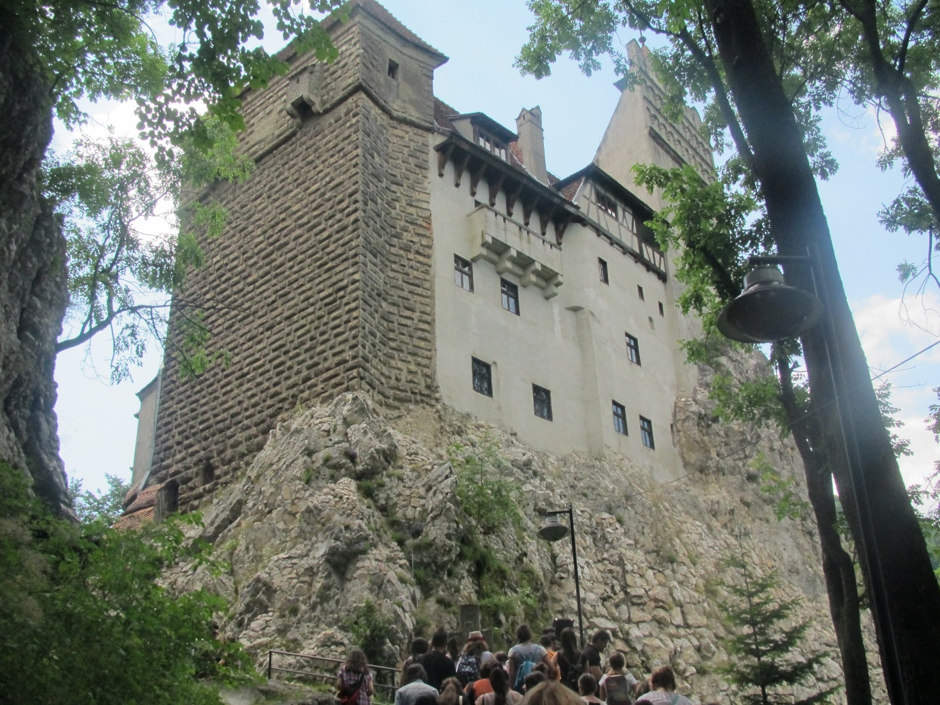
Bran Castle is Romania’s biggest tourist attraction bringing more than 570,000 visitors in 2014, the year that I visited. It is promoted outside of the country as the home of Vlad III Dracula, also known as Vlad the Impaler, but historians agree he never lived in Castle Bran and that the connection between Bran Castle and Count Dracula is purely tourist driven. There is also no evidence that Bram Stoker knew anything about the castle (he never visited Transylvania), and his book description of Dracula’s castle is only superficially close to the reality.
According to Wikipedia “The first documented mention of Bran Castle is the act issued by Louis I of Hungary on 19 November 1377, giving the Saxons of Kronstadt (modern Brașov) the privilege to build the stone castle at their own expense and labour force; the settlement of Bran began to develop nearby. In 1438–1442, the castle was used in defense against the Ottoman Empire, and later became a customs post on the mountain pass between Transylvania and Wallachia”.
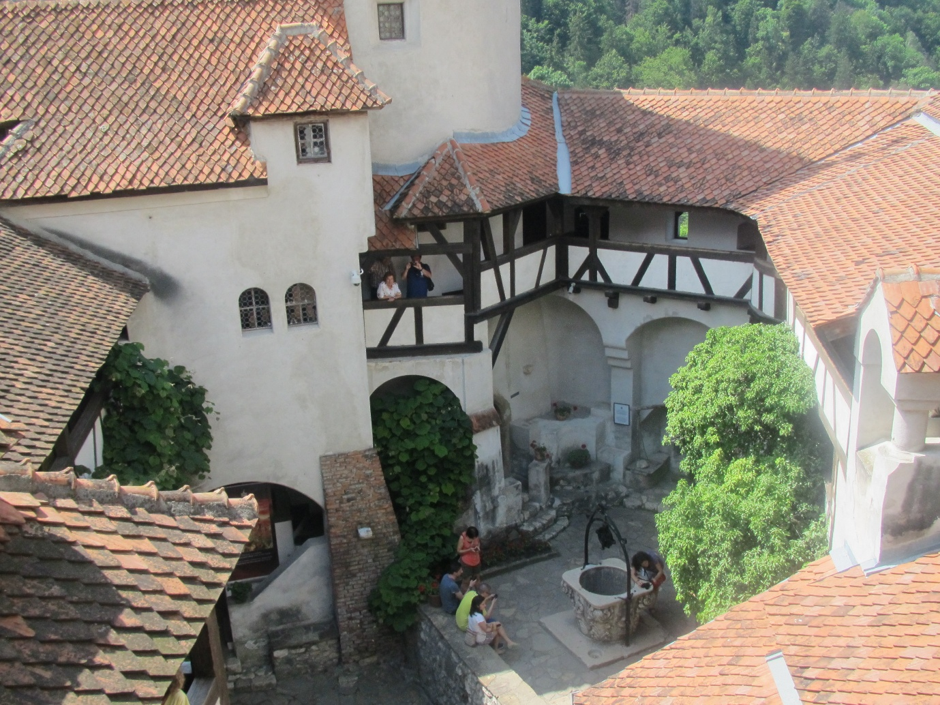
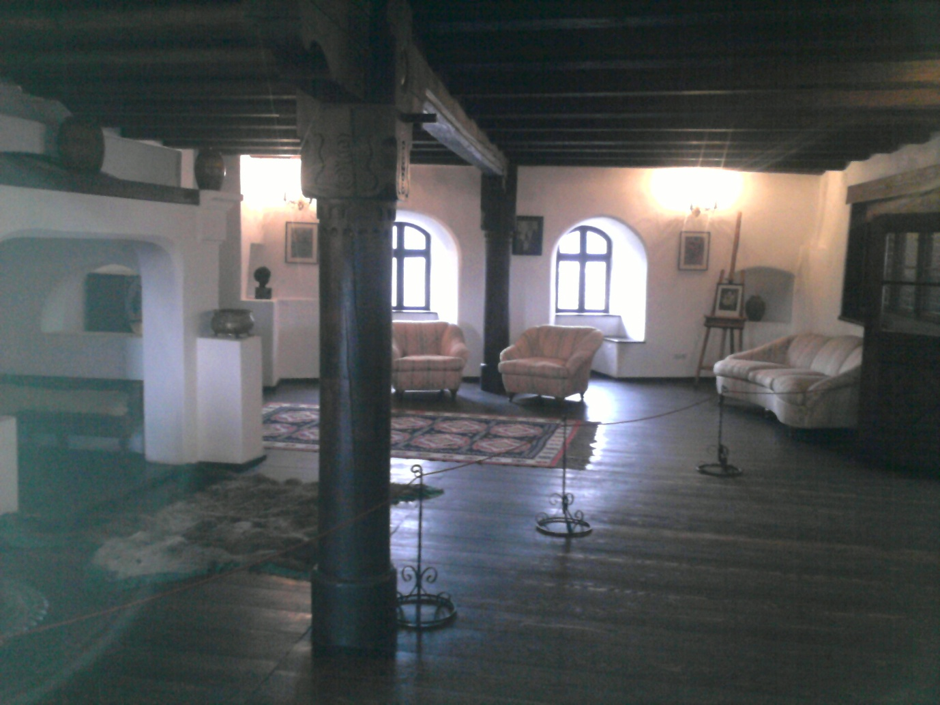
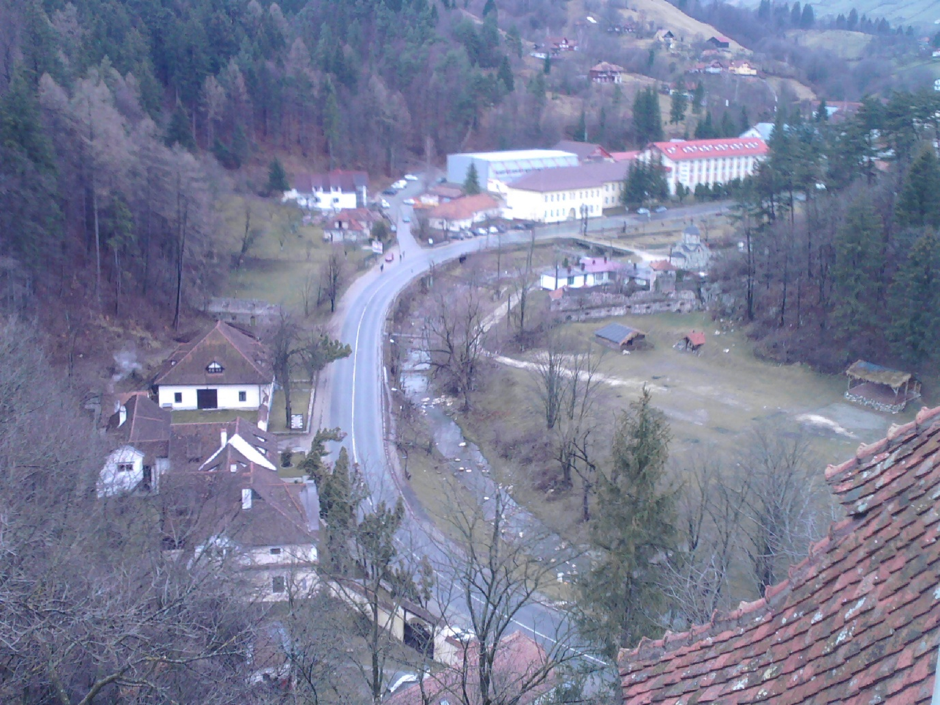
In 2014, the castle was for sale but as several million had been spent on repairing the foundations and the asking price was reportedly about ₤47 million it was way out of my league. The castle is now a museum and no longer for sale. My photos attached below show the castle and its commanding view over the approaches through the mountains.
Leave a Reply